Skip to content

Discover the island

Maspalomas, your home for Pride week

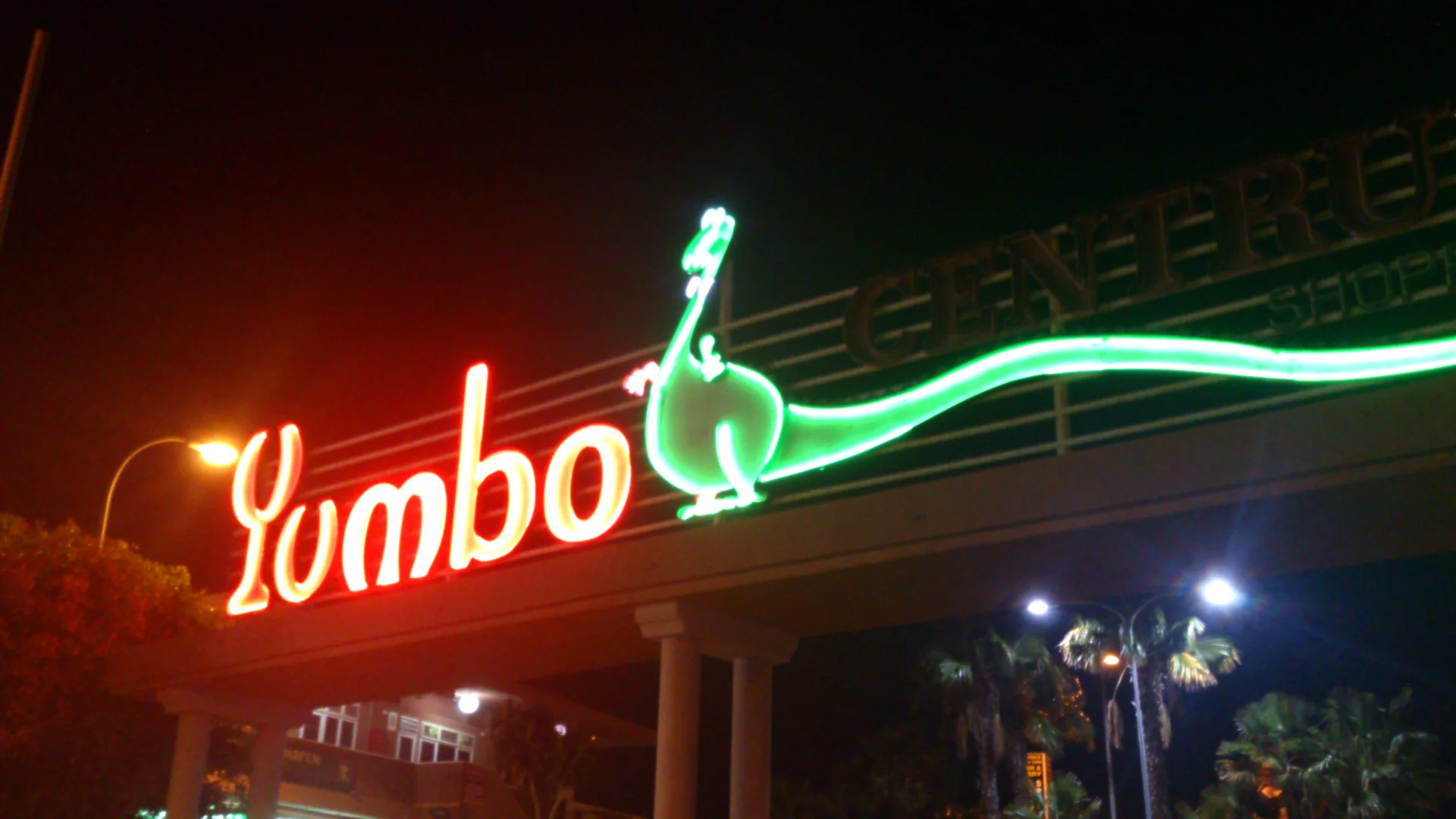
Dunes the wind redraws every day, a lighthouse lit since 1890, an average of 24 degrees all year round and the Yumbo glowing every night. Gran Canaria is far more than seven days of partying: it is a fragile island that welcomes you best when you look after it.

of protected dunes
400 ha
of the island is a Biosphere Reserve
46%
Risco Caído, World Heritage Site
2019
from the airport to Playa del Inglés
32 km

The south first

From the lighthouse to the Yumbo

Everything the festival needs is a walk or a short bus ride away: the dunes, the Kiosk 7 beach, the lighthouse, the Yumbo and the party pools. Start here.

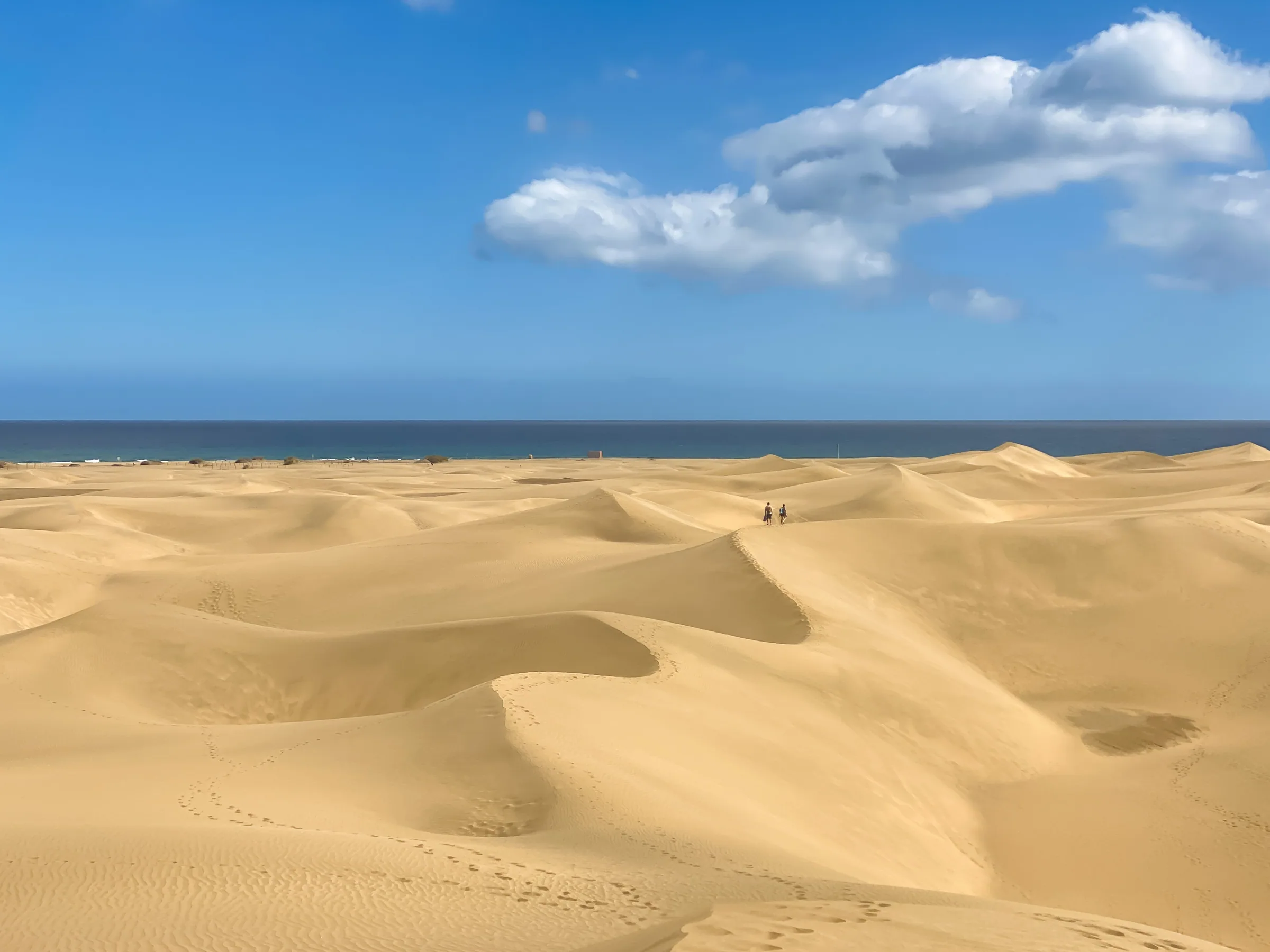
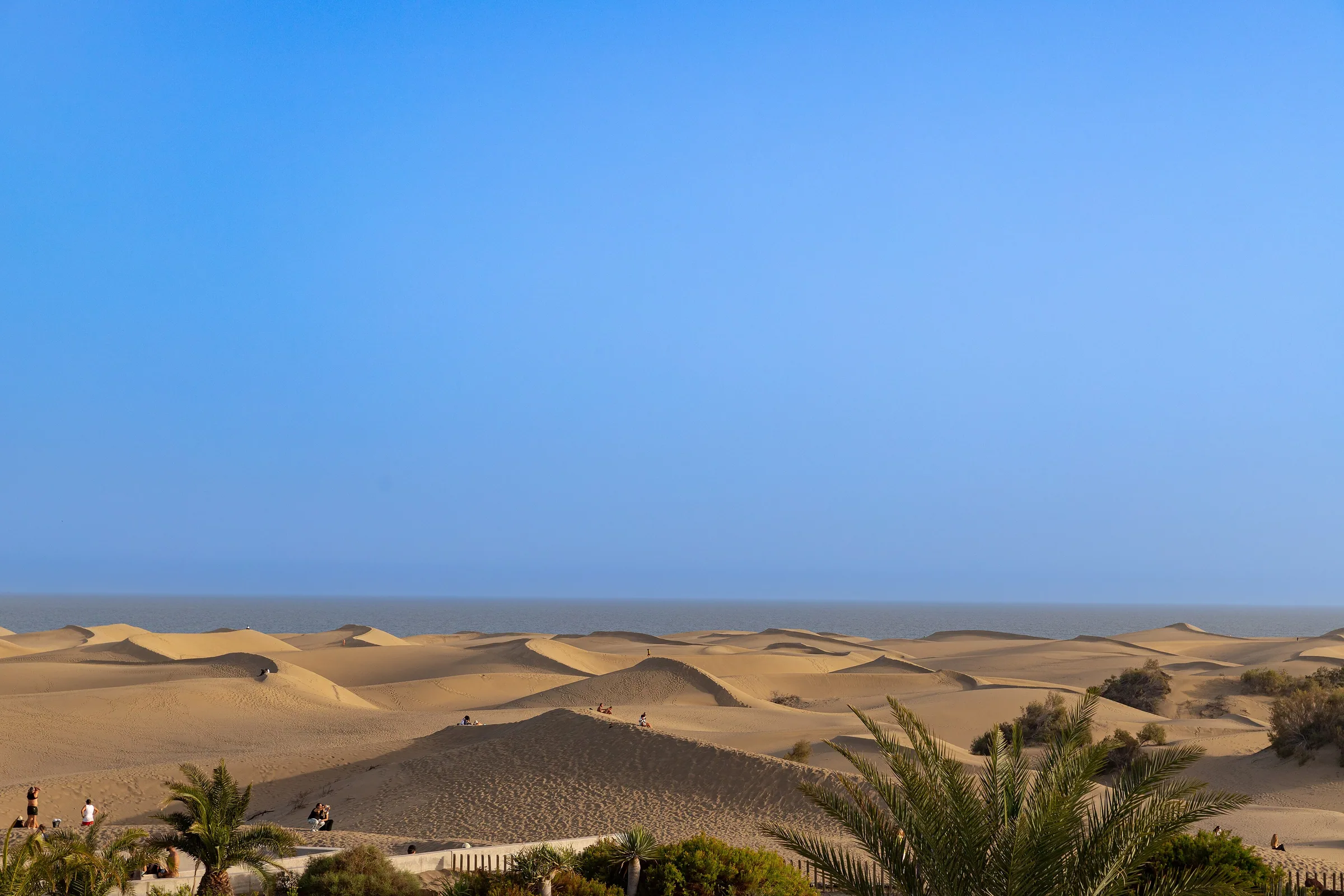
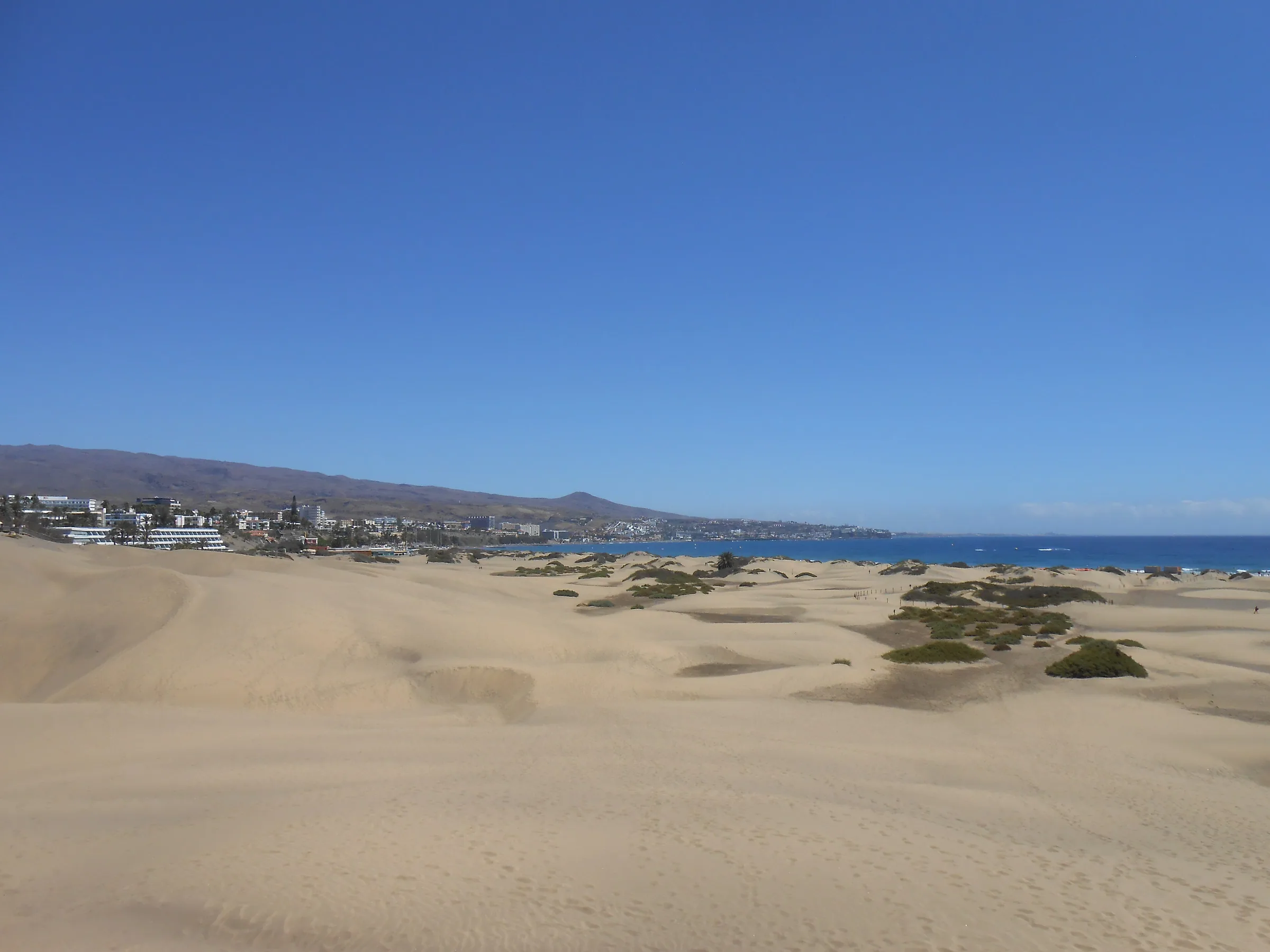
  • Maspalomas Dunes
    Photo: dronepicr · CC BY 2.0

    Special Nature Reserve

    Maspalomas Dunes

    A living field of sand, roughly 400 hectares between Playa del Inglés and the lighthouse: dunes the wind reshapes daily, a palm grove and a brackish lagoon where birds rest. It is a Special Nature Reserve and the backdrop to the whole festival. Walk it on the marked trails and along the shore; the moving dunes themselves are off limits.
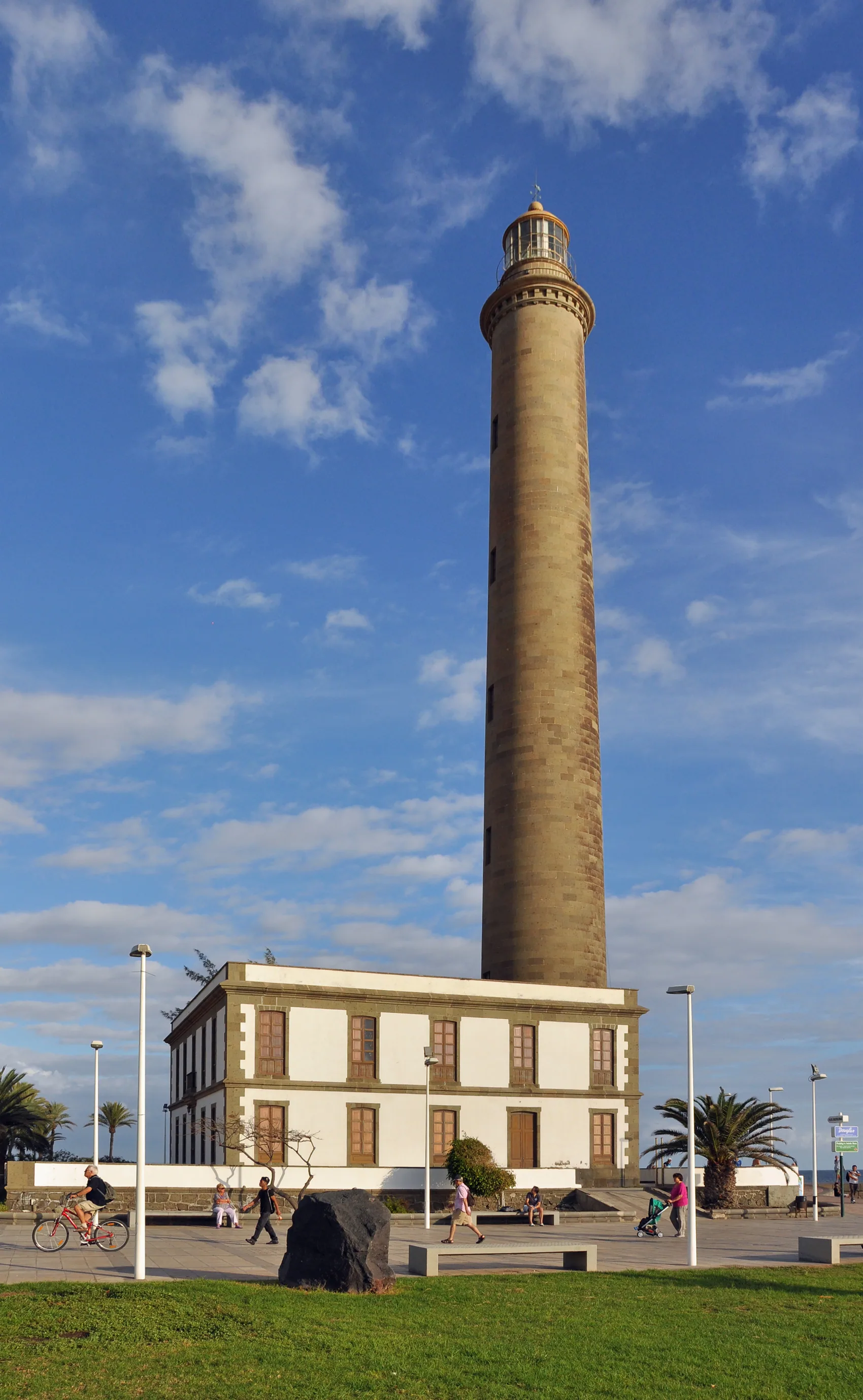
  • Maspalomas Lighthouse
    Photo: Marc Ryckaert (MJJR) · CC BY 3.0

    Historic lighthouse · listed monument

    Maspalomas Lighthouse

    A tower of blue-grey ashlar almost 55 metres tall, marking the southern tip of Gran Canaria since 1 February 1890. Designed by the Telde-born engineer Juan de León y Castillo, it is still a working light, and the keepers' house at its base now holds an ethnographic centre and a tourist office. It is the hinge between Maspalomas beach and the Meloneras promenade.

  • Kiosk 7, "El Siete"
    Photo: Handelsgeselschaft · CC BY-SA 4.0

    LGBTQ+ beach · Playa de Maspalomas

    Kiosk 7, "El Siete"

    Kiosk number 7 on Maspalomas beach is the traditional meeting point of the LGBTQ+ community: a simple beach bar on the sand, between the ocean and the dunes. The Canary Islands tourist board calls this the LGBT beach par excellence. It is a public beach, nudism is customary along this stretch, and the only rule is the usual one: respect, for people and for the reserve.

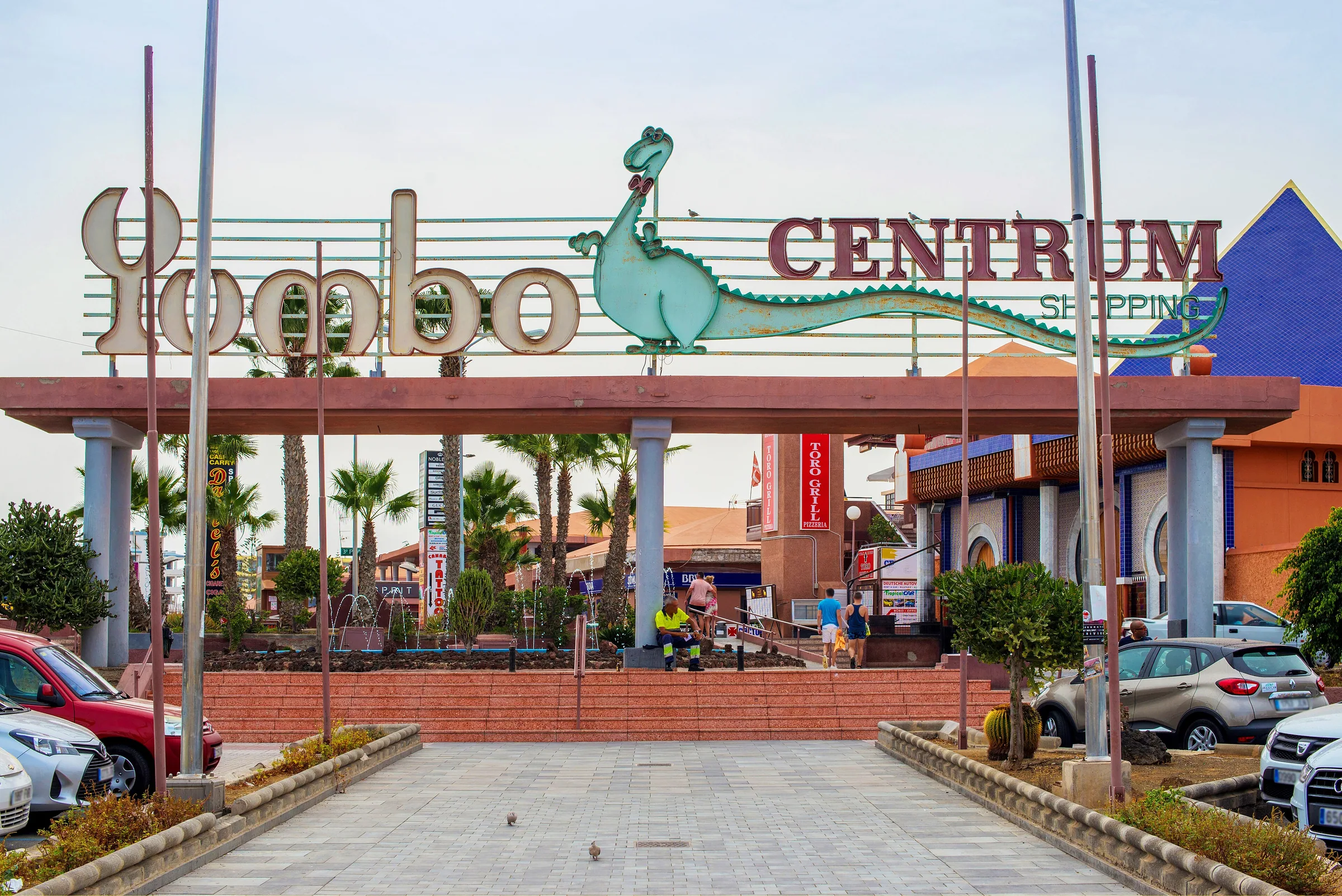
  • Yumbo Centrum
    Photo: Marek Śliwecki · CC BY-SA 4.0

    Shopping and nightlife centre · the LGBTQ+ heart of Playa del Inglés

    Yumbo Centrum

    An open-air shopping centre on four levels, with courtyards, terraces and a big central plaza, opened in October 1982 between Avenida de Tirajana and Avenida de España. By day, shops, cafés and family tourism; by night, bars, cabarets and clubs that make it the LGBTQ+ epicentre of Gran Canaria. The Maspalomas Pride galas happen here, and the parade ends at its door.

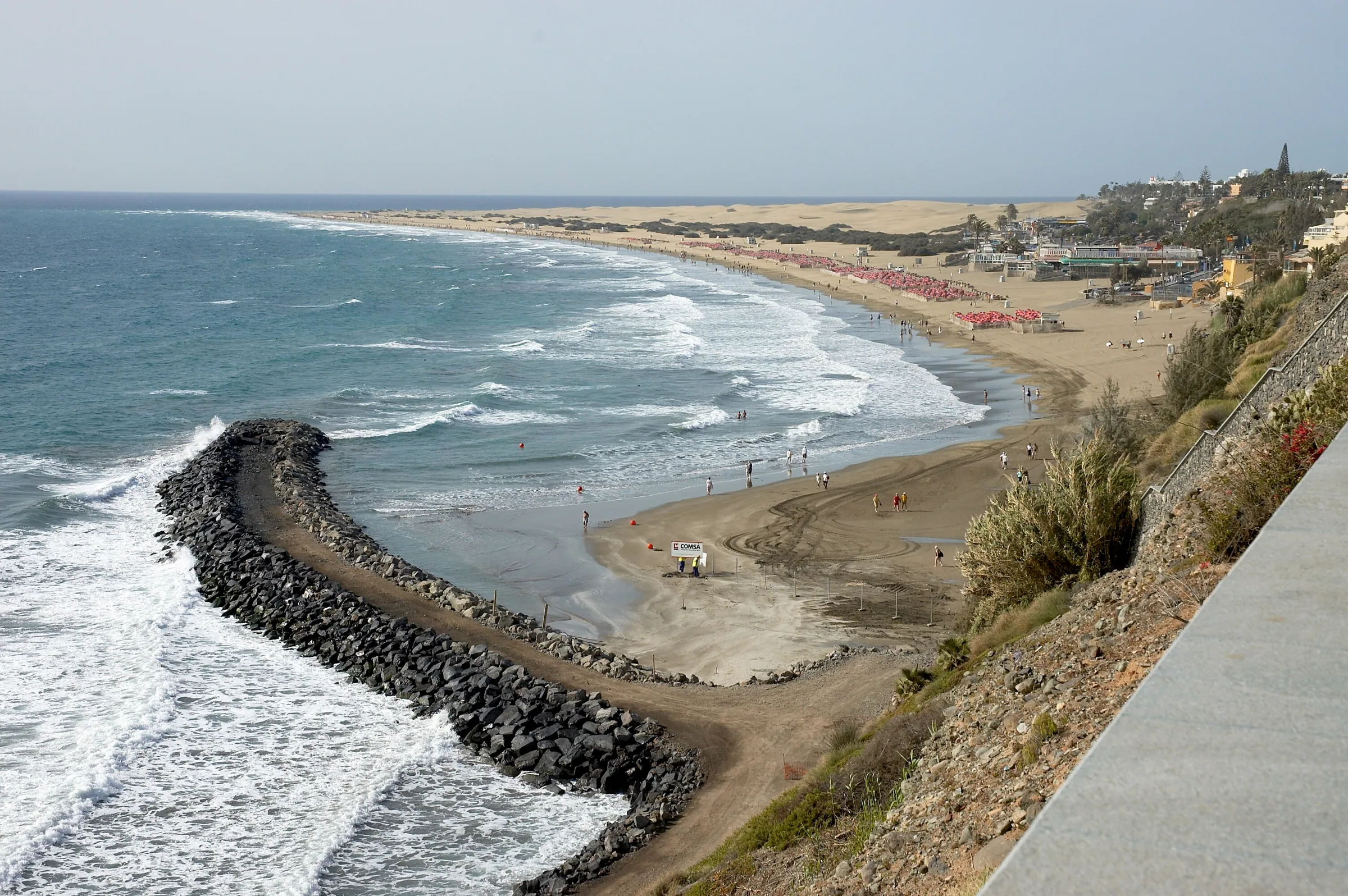
  • Playa del Inglés
    Photo: Wouter Hagens · Public domain

    Resort beach · 2.7 km of golden sand

    Playa del Inglés

    Some 2.7 kilometres of golden sand and calm water that begin at the foot of the resort and grow more open and wild towards Punta de Maspalomas, where the dunes begin. Above it runs the Paseo Costa Canaria, five kilometres from San Agustín to the Mirador de las Dunas. It is the beach of the festival's hotels and the starting point of the parade.

  • Maspalomas Beach
    Photo: dronepicr · CC BY 2.0

    Natural beach · 2.7 km from the lighthouse to the Punta

    Maspalomas Beach

    From the lighthouse to Punta de Maspalomas, 2.7 kilometres of golden sand with the dunes at your back and, just behind the shoreline, the Charca: a brackish lagoon that is Gran Canaria's most important wetland and a stopover for migrating birds. A wide, open beach with numbered kiosks, a naturist stretch and kiosk 7 as the LGBTQ+ meeting point.

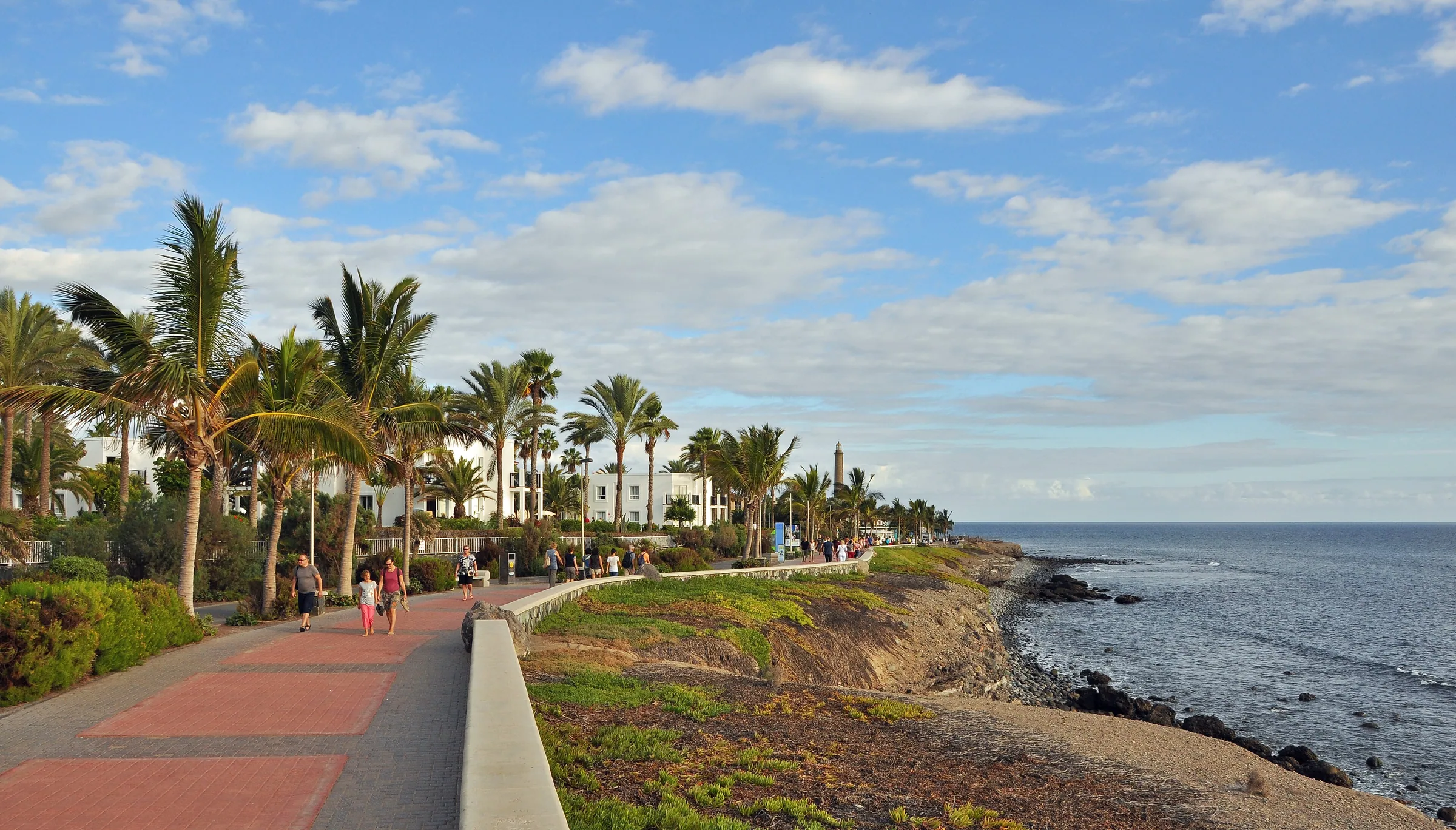
  • Meloneras
    Photo: Marc Ryckaert (MJJR) · CC BY 3.0

    Seafront promenade and hotels · west of the lighthouse

    Meloneras

    West of the lighthouse the coast changes register: a wide, flat seafront promenade with terraces, shops and the big Meloneras hotels on one side and the Atlantic on the other, ending at a short sandy cove. Halfway along, almost unannounced, sits a pre-Hispanic settlement more than a thousand years old, Punta Mujeres. This is the area for a quiet dinner and the sunset.

Proud since 2001

The south that opened its doors

Maspalomas and Playa del Inglés were among the first places in Spain to welcome LGBTI travellers. Today their Pride opens the European Pride season every May.

By night, the Yumbo

It opened in October 1982 and today holds more than 200 venues on four levels around an open-air plaza. By day it is a shopping centre; by night, gay bars, cabarets and clubs. During Pride its plaza, the Plaza de la Diversidad, becomes the Pride Park: free galas every night in front of the main stage.

Read more

By day, Kiosk 7

Mornings belong to the beach. The stretch by Kiosk 7, between the sea and the dunes, has been the community's meeting point for decades, with the rainbow flag flying. It is a public beach and nudism is customary along it; the rule is the usual one, respect. The dunes behind are a nature reserve: enjoy them from the trail and the shore.

Read more
A party and a protest

A party and a protest

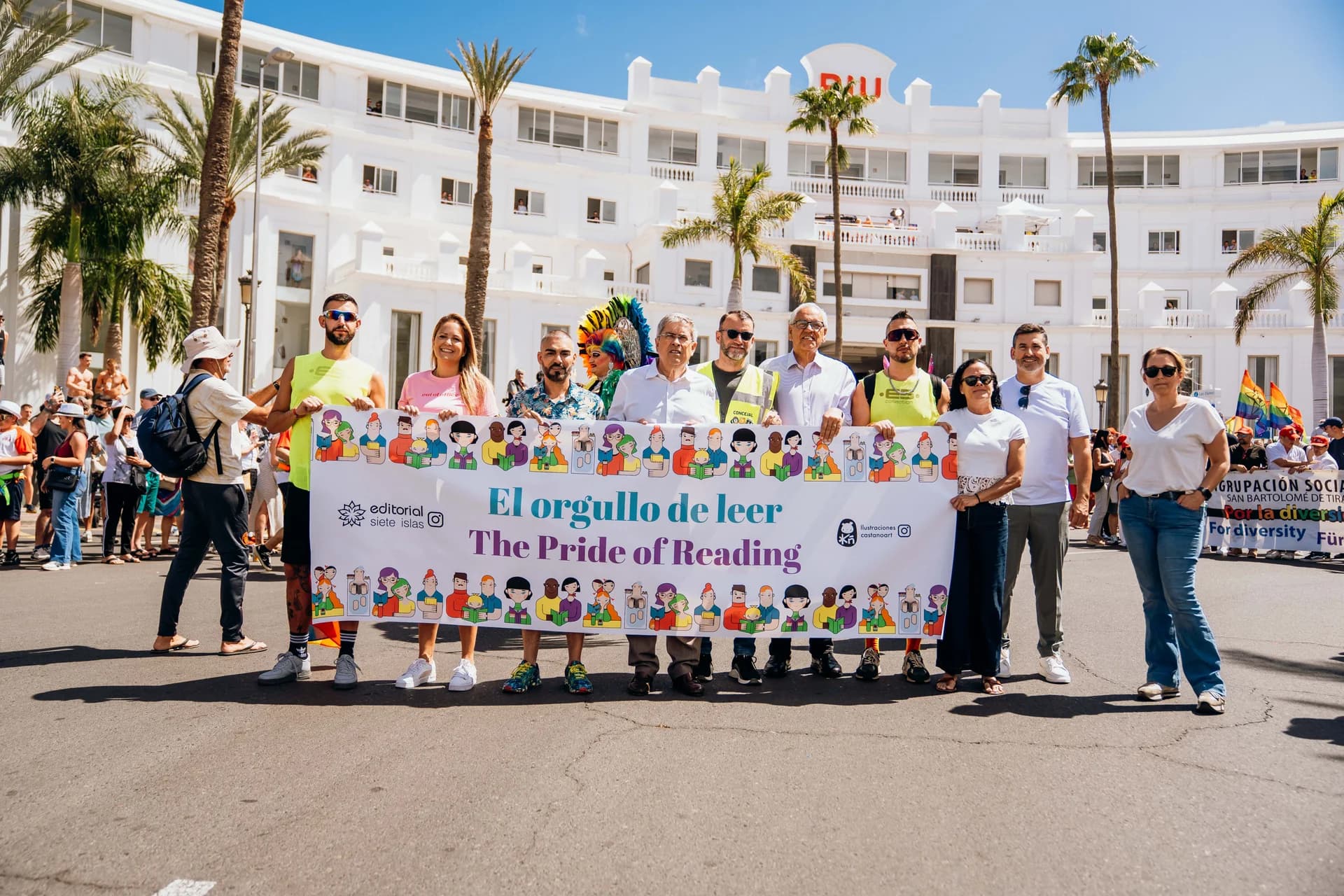
Maspalomas Pride was born in 2001 and is still both things. On Saturday the parade rolls through the avenues of Playa del Inglés to the Yumbo with floats, banners and flags from half the world: it began as a protest, and it still is one.

See the parade
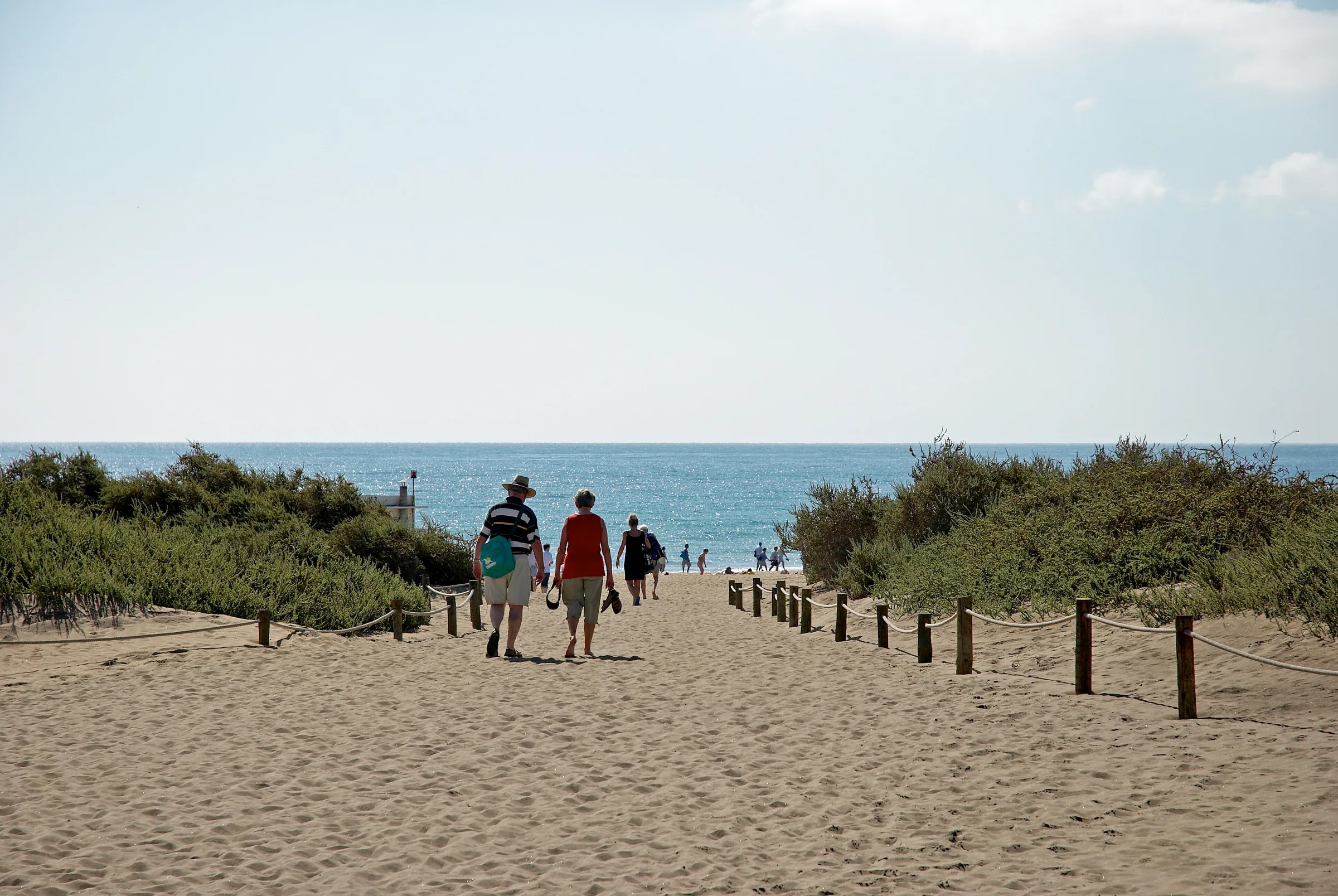
A waymarked trail through the dunes to the sea
Photo: Wouter Hagens · Public domain

Responsible travel

Leave nothing but your gaze

It is the motto the Cabildo of Gran Canaria uses to protect the Maspalomas Dunes, and it holds for the whole island. Seven ways to look after it:

  1. Walk only on the marked trails and along the shore: the moving dunes are off limits and staying inside the reserve is forbidden.
  2. Do not build stone windbreaks or cairns, and do not take sand, stones or shells home: nature is not a souvenir.
  3. Do not pick plants or feed the animals. The balancón, the shrub that holds the dunes in place, is the keystone of the whole system.
  4. Take your rubbish with you: the wind carries it straight into the reserve.
  5. Save water: in the Canaries most of it comes from desalination plants and making it takes a lot of energy.
  6. Swim under a green flag, never a red one. If a current drags you, do not fight it: let it carry you, swim parallel to the shore and raise an arm so the lifeguard sees you. If you see someone in trouble, alert the lifeguard or call 112.
  7. Keep the music down in nature and respect the neighbours' rest: people live here too.

The dunes have environmental information officers and patrols; offences are fined from 150 euros.

Local economy

Local first

Tourism is almost 38% of the Canary Islands' economy. Every euro you spend in a bar, a shop or a market on the island stays on the island: choose local produce and local businesses.

  • Wrinkled potatoes with mojo

    Potatoes boiled in their skins in very salty water, with red or green mojo sauce.

  • Flor de Guía cheese

    The only Canarian cheese curdled with thistle flower, harvested in April and May. Protected Designation of Origin.

  • Gofio

    Flour of toasted grain; on Gran Canaria, made from maize since the 16th century. Protected Geographical Indication.

  • D.O. Gran Canaria wine

    Vineyards between 200 and 1,300 metres, from the coast to the summit.

  • Arucas rum

    Distilled in Arucas, in the north of the island, since 1884.

  • Bienmesabe

    The almond cream of the uplands, associated with Tejeda.

San Fernando street market (Maspalomas): Wednesdays and Saturdays, at the Municipal Market. San Fernando farmers' market: every other Sunday, 8:00 to 13:30, with island cheese, honey, bread and fruit; check its location before you go.

The whole island

A miniature continent

That is what they call Gran Canaria: within an hour you go from a desert of dunes to the pine forests of the summit. For your free days, three routes and six places.

  1. The Golden South

    Dunes, a lighthouse and a picture-book harbour along the sunny coast

    The easiest route from the festival: start among the Maspalomas dunes, carry on past the lighthouse and the Meloneras promenade and finish in Puerto de Mogán, with its canals and its fresh fish. Half a day by car on the GC-1 heading west, or an unhurried day by bus on Global lines 1 and 32, which leave from the Faro de Maspalomas station and run along the coast.

    Maspalomas DunesMaspalomas LighthouseMelonerasPuerto de Mogán

  2. The Wild Island

    From Roque Nublo to the cliffs of Agaete: the vertical island

    A full day by car, and by car only: from Maspalomas you climb the Fataga ravine to the summit, walk to Roque Nublo and descend north-west to Agaete and Puerto de las Nieves, to finish with a swim in the natural pools and fresh fish. The mountain roads are slow and winding: leave early, book the Roque Nublo trail and come back along the north coast and the GC-1.

    Roque NubloAgaete and Puerto de las Nieves

  3. Culture & City

    The capital, its beach and the patron saint's town

    Las Palmas de Gran Canaria in a day: Vegueta in the morning and Las Canteras in the afternoon; then, with a second day or if it falls on a Sunday, Teror, some 20 km from the capital. It is the route that works best by bus: Global line 30 links Faro de Maspalomas and Playa del Inglés with the city, and line 216 climbs from San Telmo to Teror.

    VeguetaLas Canteras BeachTeror

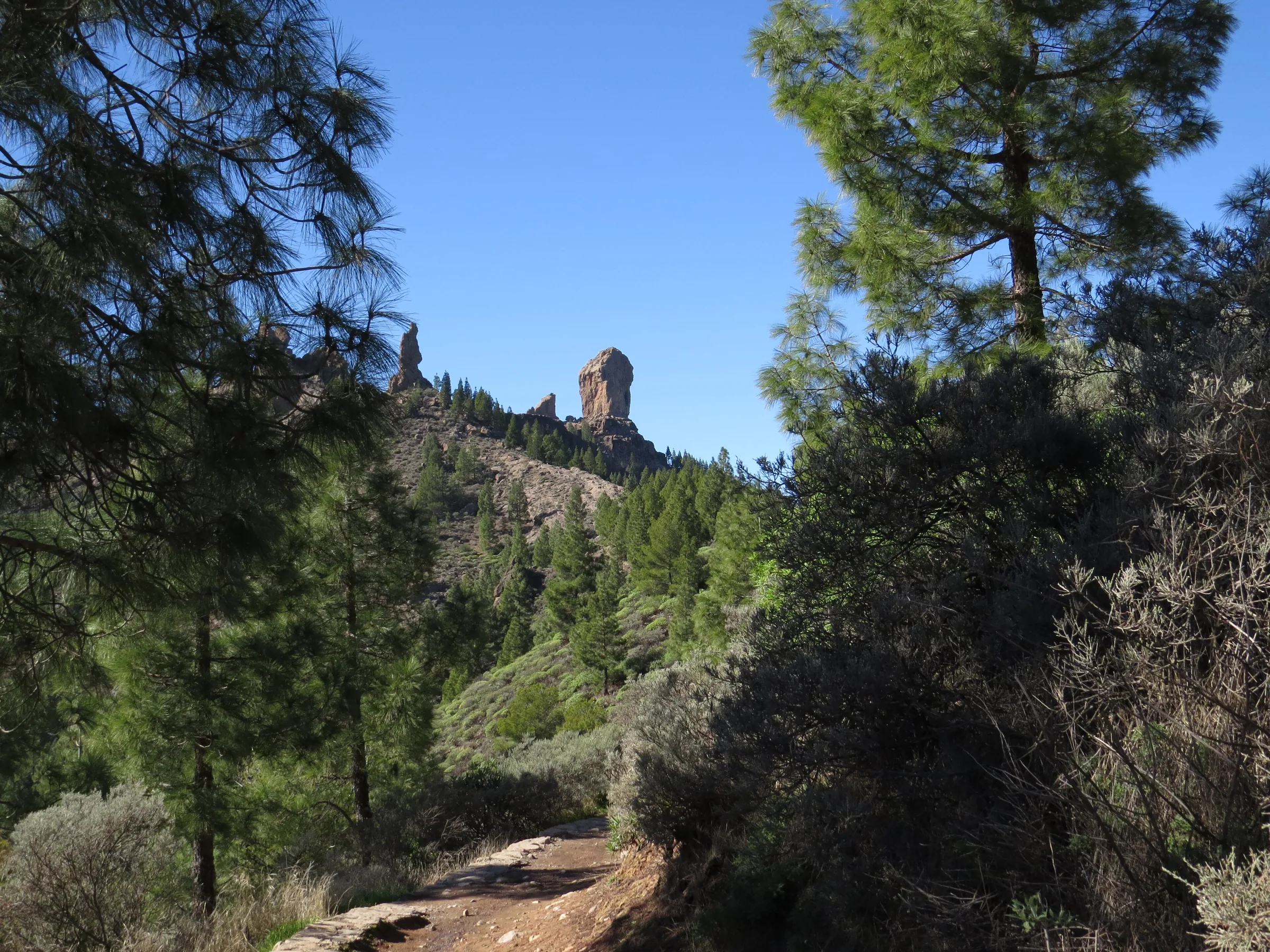
  • Roque Nublo
    Photo: Basotxerri · CC BY-SA 4.0

    Natural monument

    Roque Nublo

    At the geographic centre of Gran Canaria, more than 1,800 metres up, a volcanic monolith some 80 metres tall stands on a bare stone plateau. Roque Nublo is the island's emblem and the most memorable short walk you can make from the coast: pine forest, stone steps and, on clear days, Mount Teide on the horizon.

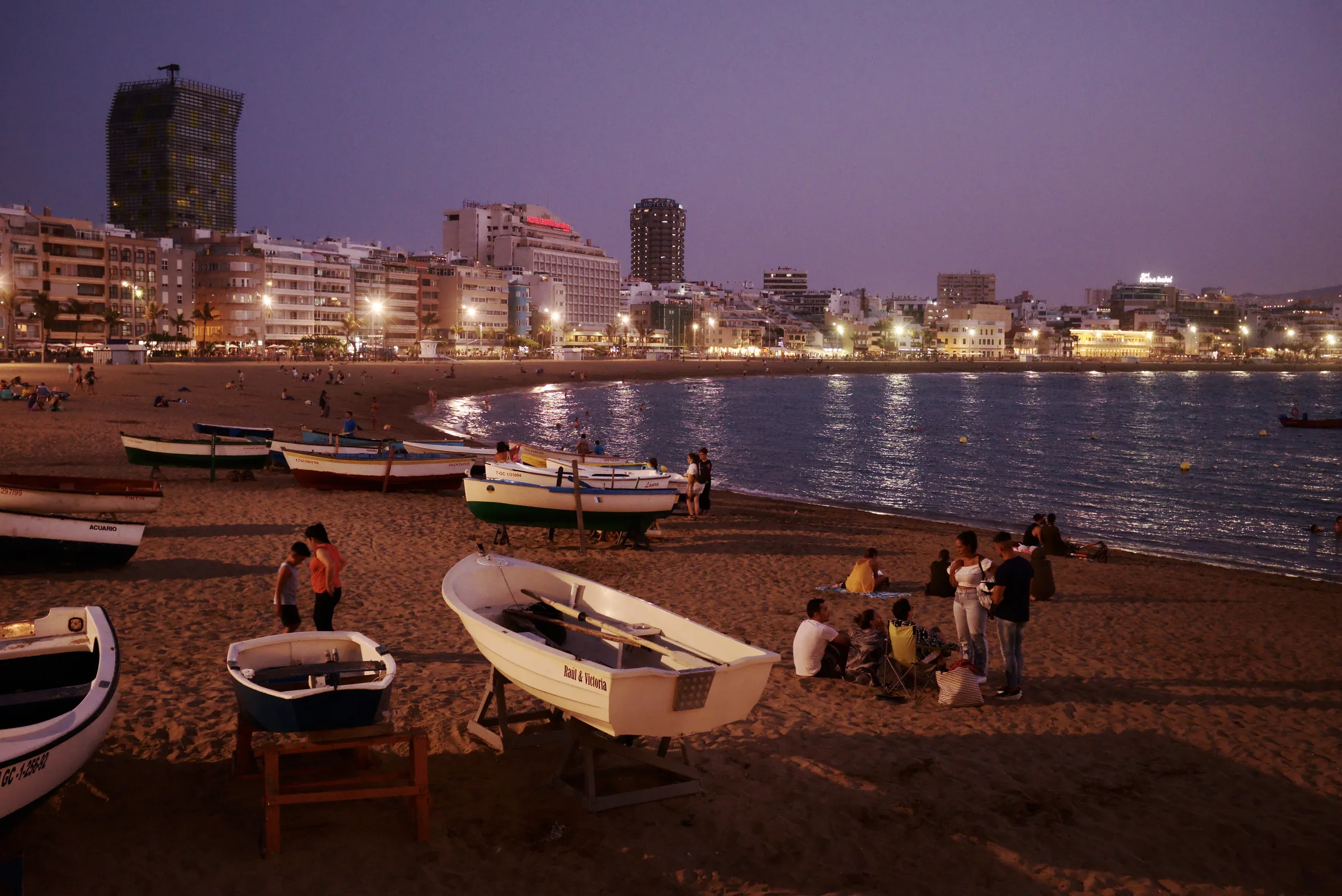
  • Las Canteras Beach
    Photo: Nicolas Vigier · CC0

    City beach

    Las Canteras Beach

    Las Palmas de Gran Canaria keeps a beach of more than three kilometres right in the city: Las Canteras, sheltered by La Barra, a reef that turns half the bay into a natural pool. A pedestrian promenade runs its whole length, from the fishermen's corner at La Puntilla to the surf at La Cícer and the Auditorio Alfredo Kraus at the far end.

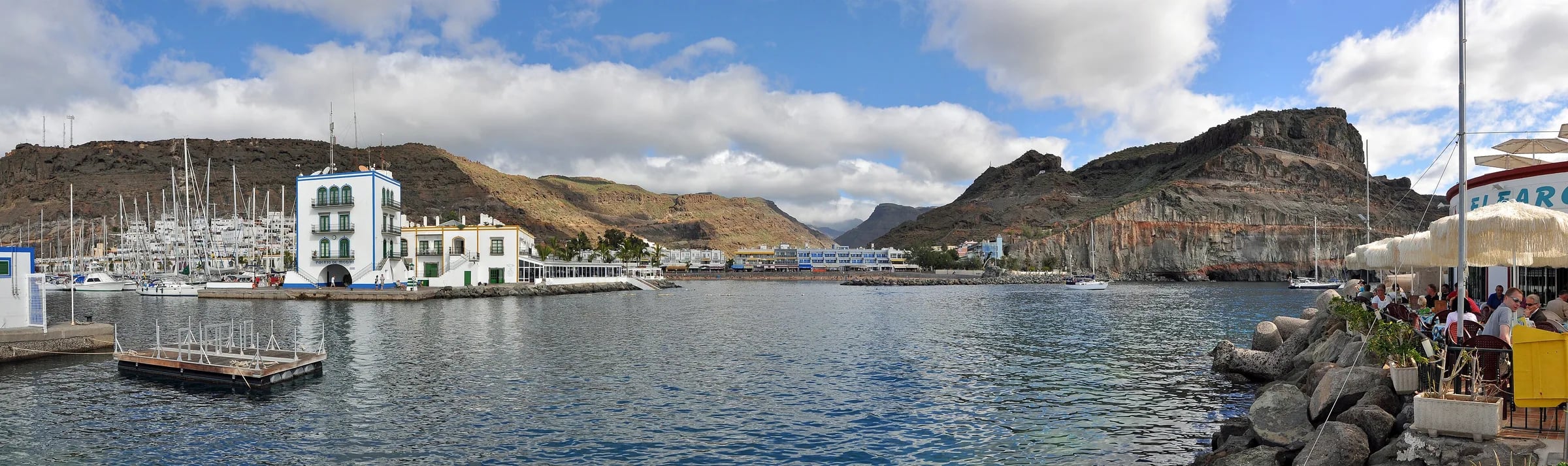
  • Puerto de Mogán
    Photo: Marc Ryckaert (MJJR) · CC BY 3.0

    Harbour village

    Puerto de Mogán

    On the island's south-west coast, Mogán keeps its most photographed harbour: spotless houses smothered in bougainvillea, seawater canals crossed by little bridges, a marina where fishing boats moor beside yachts, and a small, sheltered beach. The official tourist board calls it "the little Venice of the Canaries"; it is also the perfect excuse for a long lunch of fresh fish.

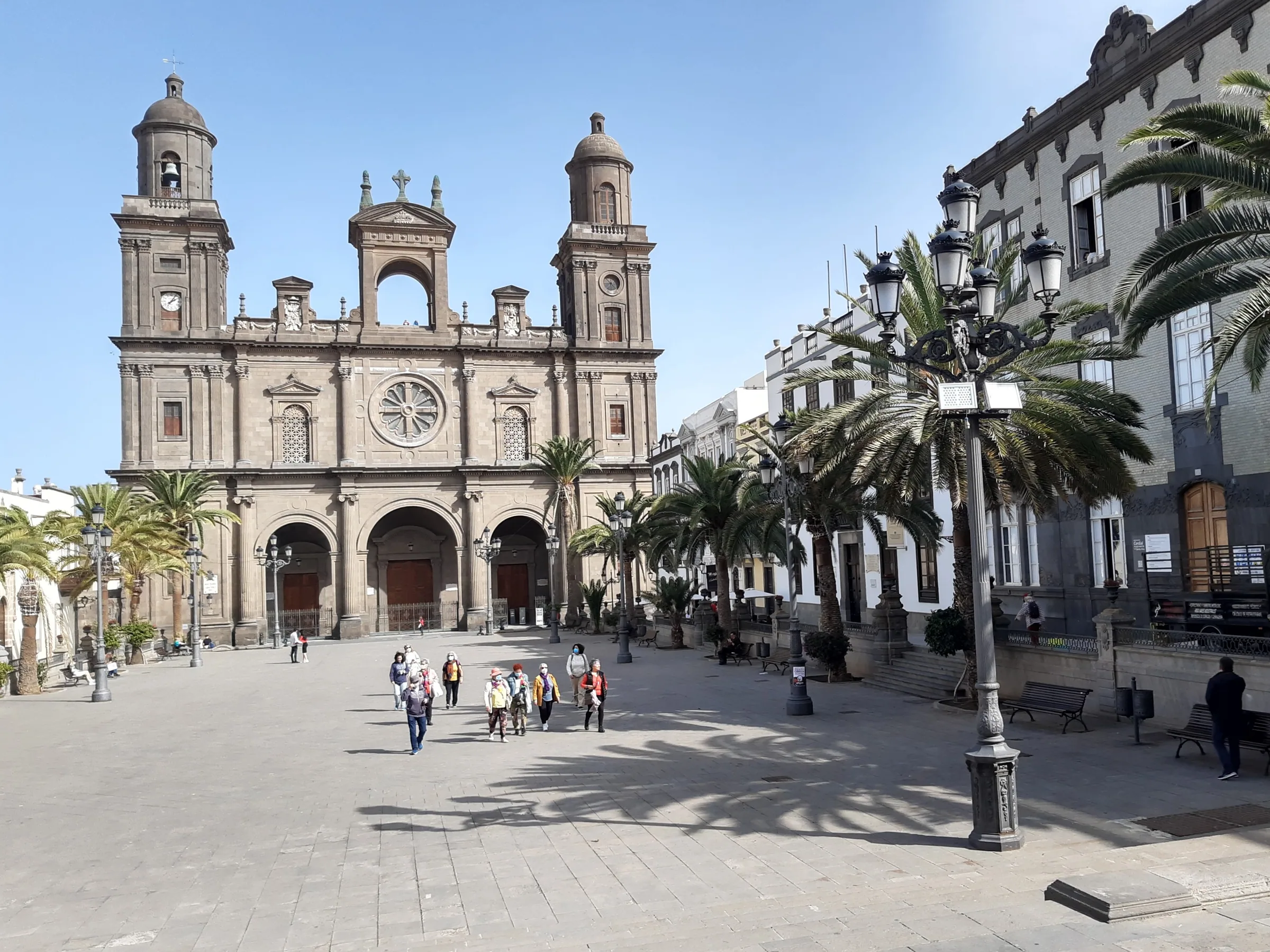
  • Vegueta
    Photo: Gerda Arendt · CC BY-SA 4.0

    Historic quarter

    Vegueta

    Las Palmas de Gran Canaria was born here on 24 June 1478, when Juan Rejón pitched the camp of the Real de Las Palmas beside the Guiniguada ravine. Vegueta still holds that memory: cobbled streets, mansions with Canarian balconies, the Cathedral of Santa Ana and its square guarded by iron dogs, the Casa de Colón and a produce market trading since 1858.

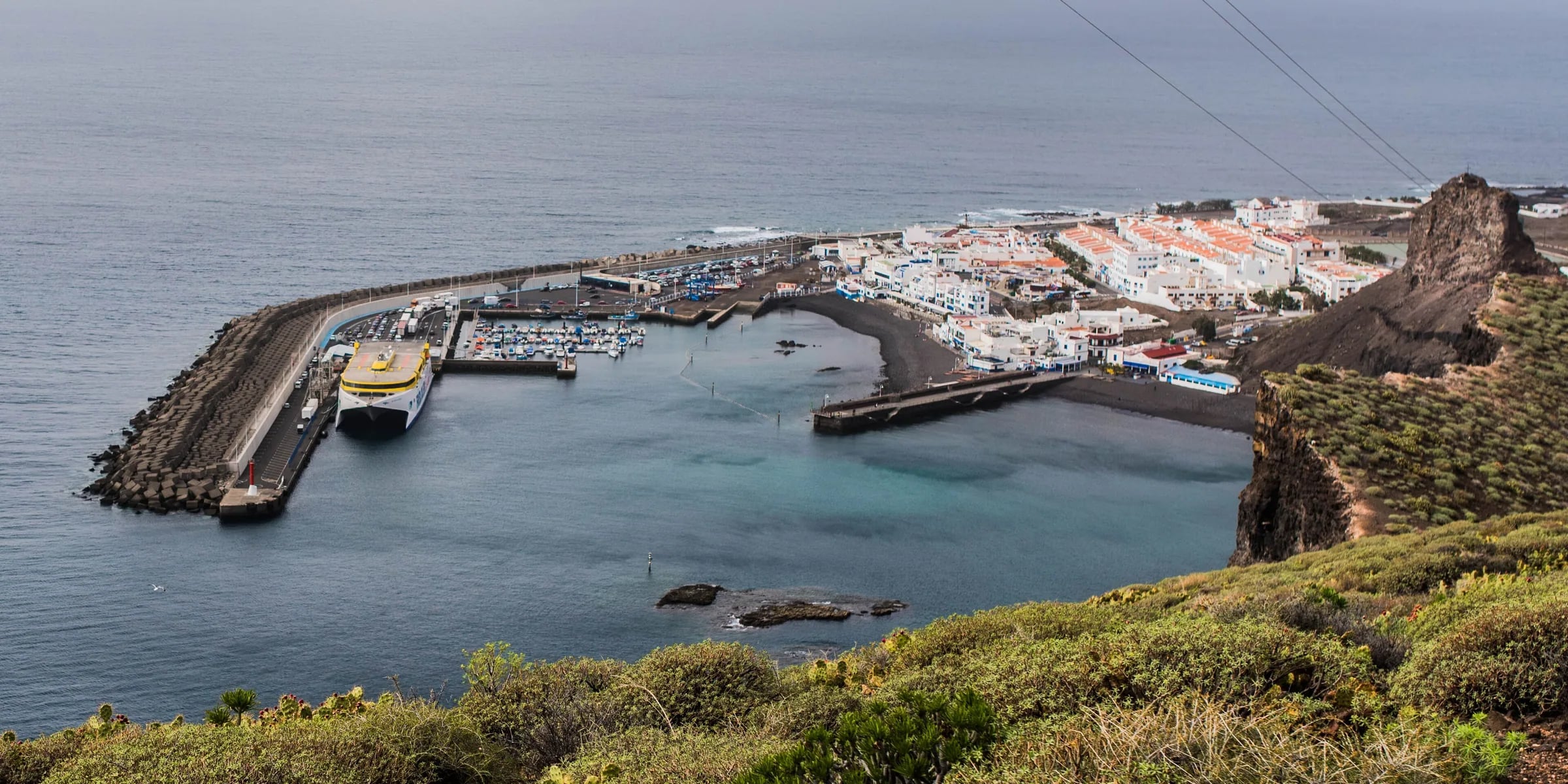
  • Agaete and Puerto de las Nieves
    Photo: Bengt Nyman from Vaxholm, Sweden · CC BY 2.0

    North-west town and harbour

    Agaete and Puerto de las Nieves

    In the island's north-west corner, Agaete splits its charm between a town at the foot of a green valley and a fishing harbour, Puerto de las Nieves, tucked beneath the Tamadaba cliffs. Expect natural rock pools, fish restaurants above a pebble beach, the valley's coffee, the last still grown in the Canaries, and the fast ferry that crosses to Tenerife in about 80 minutes.

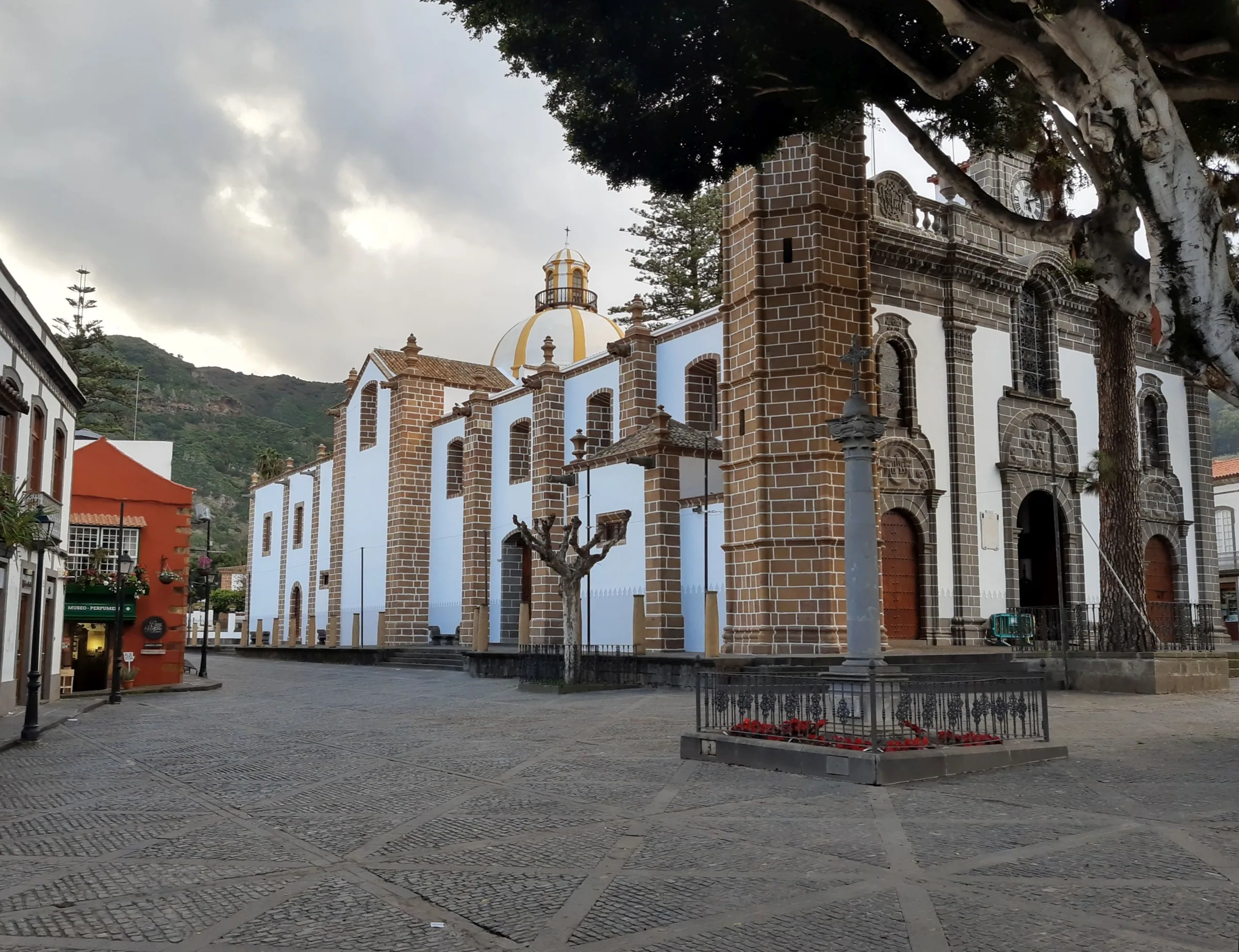
  • Teror
    Photo: Gerda Arendt · CC BY-SA 4.0

    Pilgrimage town

    Teror

    At 543 metres in the hill country of the north, Teror is Gran Canaria's spiritual heart: home to the Basílica de Nuestra Señora del Pino, the island's patron saint, and to the Calle Real de la Plaza, a parade of old houses with Canarian balconies, the oldest built in tea pine. On Sundays the old town fills with a market two centuries old: chorizo, sweet morcilla, cheese and bread.

Getting around

Come without a car

The airport is 32 kilometres from Playa del Inglés, about 30 minutes, and Global's guaguas (buses) cover the whole island.

  • 66Airport – Playa del Inglés – Faro de MaspalomasDirect, hourly.
  • 30 · 50Faro de Maspalomas – Las Palmas de Gran CanariaDirect to the capital.
  • 5Las Palmas – Playa del Inglés – Faro de MaspalomasNight service too.
  • 18Faro de Maspalomas – Tejeda, over the summitFor Roque Nublo.

You can walk between the Playa del Inglés venues and the Yumbo; for the Ocean Club, the Oasis or the summit, take a bus or a taxi. Check timetables on Global's website before you set off.

Your week starts here

Seven days of sun, dunes and parties, and an island waiting for you with open arms.

Photo credits
Sources