
Photo: Gerda Arendt · CC BY-SA 4.0
The Virgin of the Pine
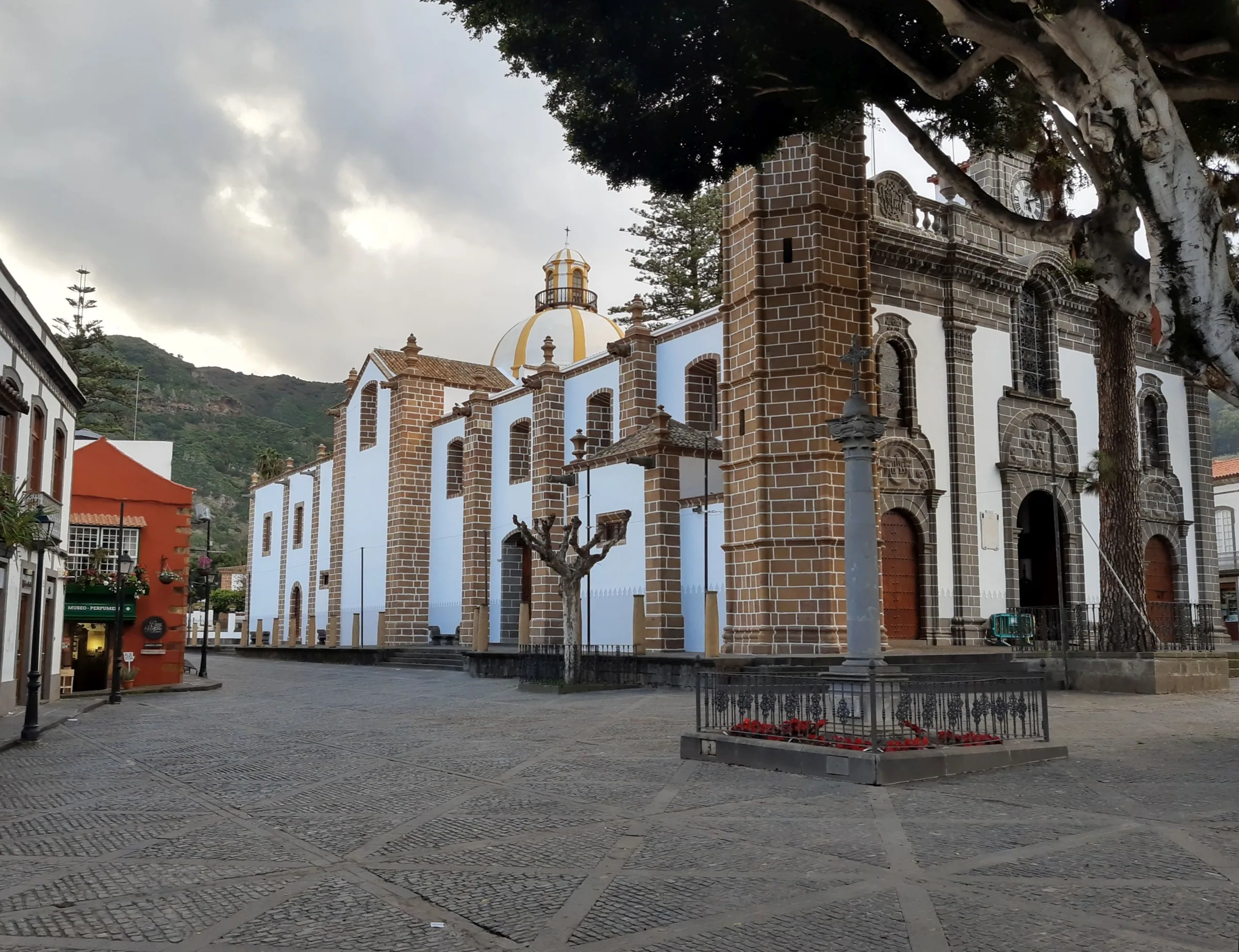
Tradition dates the appearance of the image, at the top of a pine tree, to 8 September 1481; ever since, Teror has been the centre of Gran Canarian devotion and the Virgen del Pino the patron saint of the island and of the Diocese of the Canaries. The present basilica was begun in 1767 over earlier churches, of which the Torre Amarilla survives, an octagonal yellow tower of seven storeys opened in 1708; it holds the title of minor basilica and is a National Monument. Behind the high altar, the camarín keeps the dresses and jewels the faithful have given the image over the centuries. On 7 and 8 September thousands of pilgrims arrive on foot from across the island and the towns bring their offerings in a romería.
The Calle Real and its balconies
From the Muro Nuevo to the Plaza del Pino, the Calle Real de la Plaza is the town's shopping street of old, with some of the oldest businesses in the municipality and a look fixed between the late eighteenth and the nineteenth century. Its signature is the balcony: there are wooden ones and wrought-iron ones, but the oldest and finest are those with tiled roofs built of tea pine, which families used as boxes from which to watch processions and festivities go by. The surroundings of the basilica have been a Historic-Artistic Site since April 1979. On the irregular square stand the Casa Museo de los Patronos de la Virgen, a late seventeenth-century mansion with its private chapel, and the former Bishop's Palace, now the Casa de la Cultura.
The Sunday market and the flavours
Every Sunday morning, around the basilica and in the Plaza de Sintes, one of the oldest street markets on the island sets up, with two centuries of history and about a hundred stalls: Teror chorizos and sweet morcillas, cheeses, bread, pastries, crafts and textiles. The nuns of the Cistercian monastery, founded in 1882, sell mantecados, truchas, marzipan and aniseed roscos. Less than a kilometre from the old town flows the Fuente Agria, whose water has been bottled since 1982, and some two kilometres away lies the Finca de Osorio, with remnants of laurel forest and free entry.
When to go
Sunday is Teror's day: market, shops open in the historic centre and a full basilica. On weekdays the town is quiet and can be walked in a couple of hours. If you come for El Pino, in September, expect crowds and plan your transport.
Tips
- Go on a Sunday morning: that is when Teror is Teror.
- Take home Teror chorizo and sweet morcilla, and Cistercian pastries for the road.
- On 7 and 8 September, come by bus: the town fills up.
- The Finca de Osorio, some two kilometres away, is an easy walk among laurel forest, and free.