
Photo: Nicolas Vigier · CC0
La Barra, the reef that changes everything
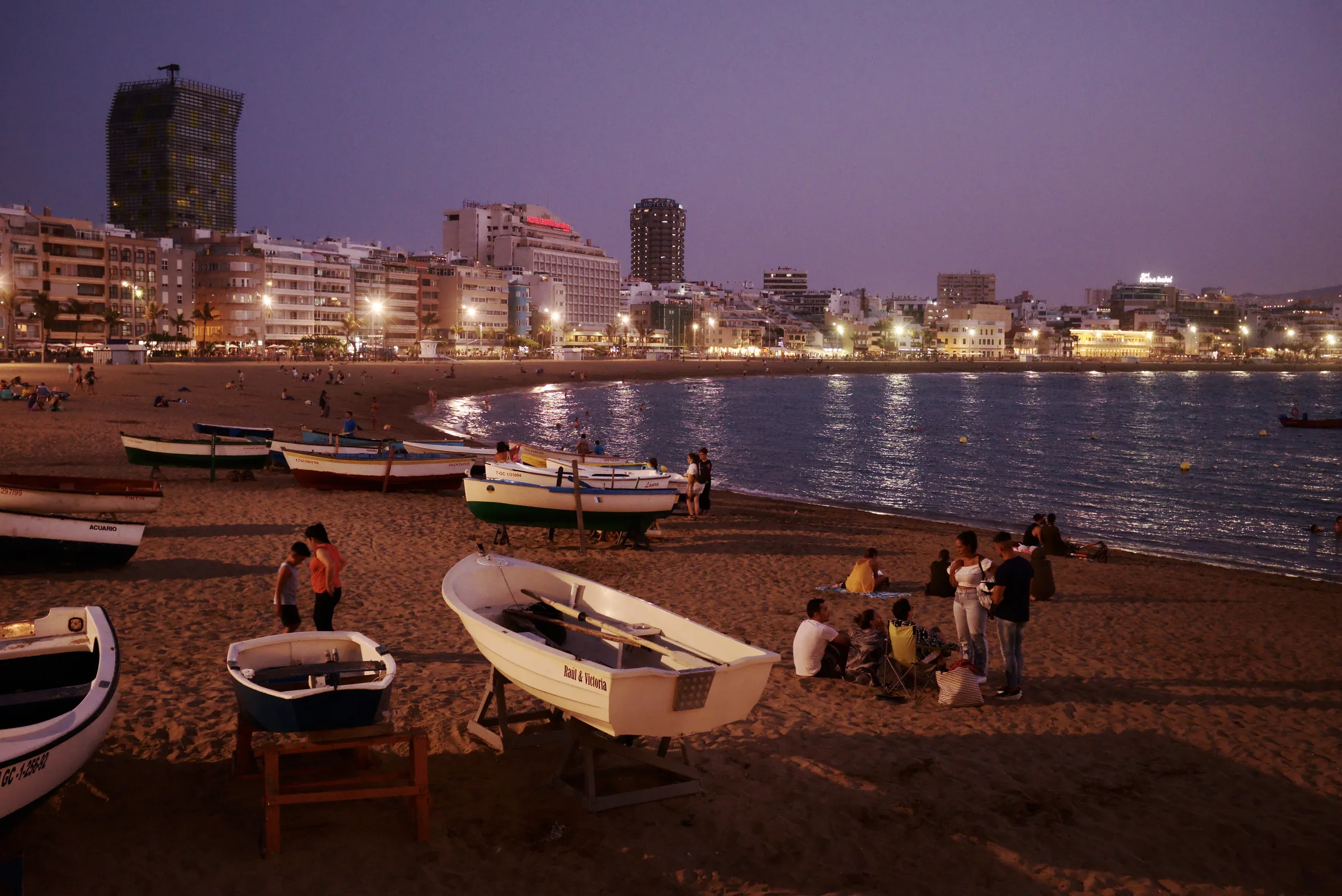
Locals call La Barra the rocky barrier that runs parallel to more than half of the beach: a limestone reef over 100,000 years old that works as a natural breakwater and shelters an ecosystem of its own marine flora and fauna. Thanks to it, the water in the northern half of the bay is calm nearly always; at low tide you can swim or walk out to the reef itself and snorkel among hundreds of subtropical species. Where the reef ends, the open sea comes in: La Cícer, next to the Auditorio, is the surfers' stretch, with waves known to surfers half the world over.
From La Puntilla to the Auditorio
More than three kilometres of sand shadowed by a pedestrian promenade of cafés, ice-cream parlours and terraces. At the northern end, La Puntilla keeps the neighbourhood's last fishermen and its fresh-fish terraces; then come Playa Chica, the most family-friendly section, and Playa Grande, the busiest. The promenade ends at the Auditorio Alfredo Kraus, which Óscar Tusquets conceived as a fortress on the rocks, with marine sculptures by Juan Bordes and a 100 m² window behind the stage of the Symphony Hall that brings the Atlantic into the concert. It hosts the Canary Islands International Music Festival and the Las Palmas Opera Festival; in the gardens, a bronze sculpture more than eight metres tall honours the Gran Canarian tenor it is named after.
When to go and what to expect
The beach is alive every day of the year and at any hour, and the promenade terraces serve from sunrise until well after dark. There are lifeguards, accessible toilets, assisted bathing and an adapted route for people with reduced mobility; the city likes to point out that Tenerife and Mount Teide can be made out from the sand on most days. It is about five minutes' walk from the cruise terminal, and the Parque Santa Catalina links the port with the beach.
Tips
- At low tide, swim or walk out to La Barra with a mask: it is snorkelling in the middle of the city.
- Fresh fish at the terraces of La Puntilla, at the start of the promenade.
- La Cícer, by the Auditorio, is the surfing end: that is where the boards gather.
- Check the programme at the Auditorio Alfredo Kraus: a concert with the ocean behind the stage is a different kind of Pride night.