
Photo: Marc Ryckaert (MJJR) · CC BY 3.0
Thirty years to light a lamp
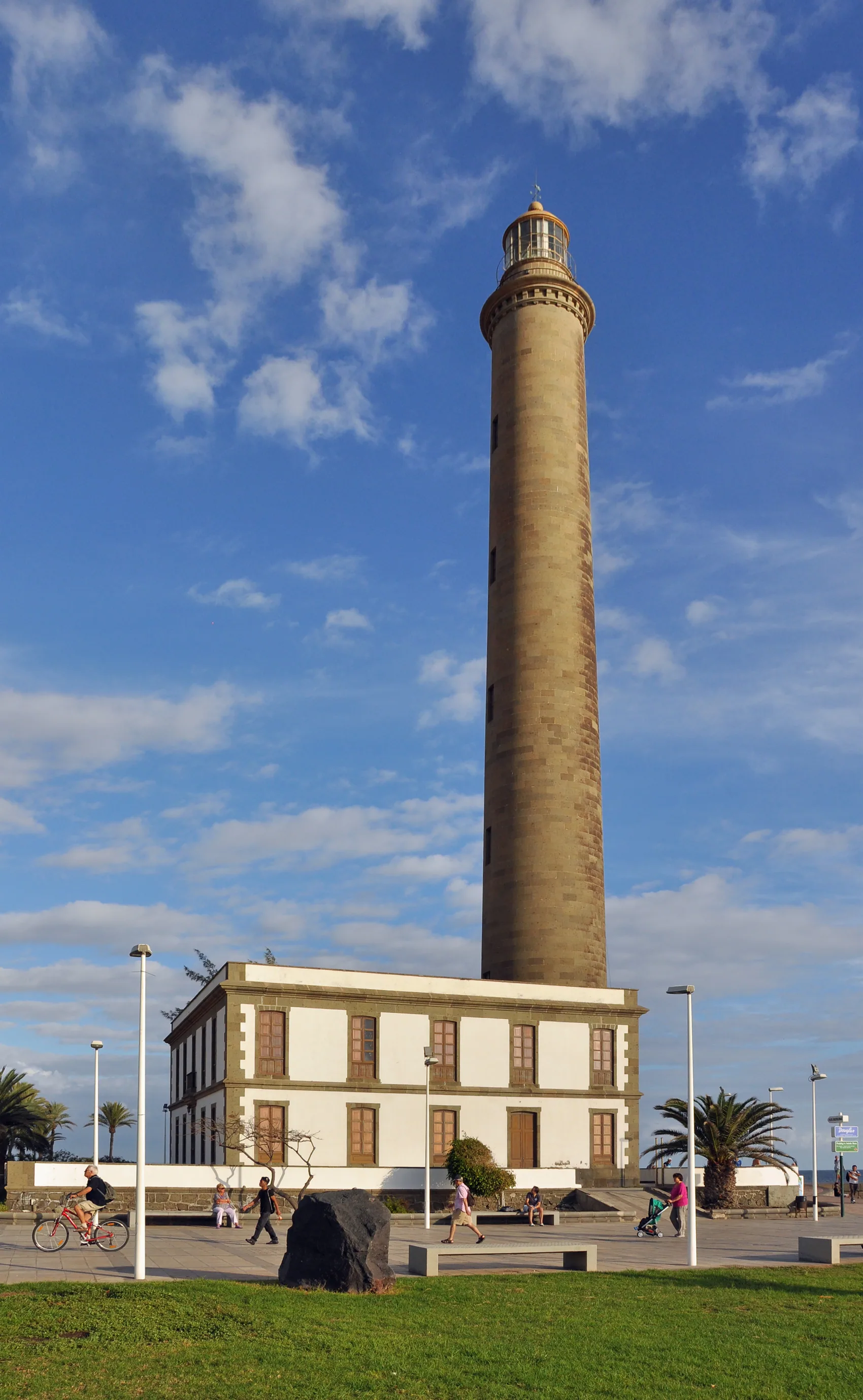
The Lighthouse Commission proposed a first-order light at Punta de Maspalomas in 1861, but the commission only came in 1884, when Juan de León y Castillo drew up the project. Work lasted until 1889 in a deserted, isolated spot, so remote that a small jetty with a ramp had to be built to land the materials. The lamp was lit on 1 February 1890 to give a landfall to steamers on the Africa, Oceania and America routes and to the fishing fleet of the Canary-Saharan bank. It remains automated and in service today, with a nominal range of 19 nautical miles.
What to look at
The ensemble has two parts: the keepers' house, square in plan around a Canarian patio with eclectic façades, and the column, a truncated cone of ashlar that starts 8 metres wide and narrows to 6.20 at the upper body; the house works as a plinth that braces the tower. Look for the rose window facing the sea and the iron-and-glass lantern. It was declared a Bien de Interés Cultural, in the Monument category, by Decree 55/2005 of the Canary Islands Government.
Inside: the Ethnographic Centre
After a restoration funded by the Cabildo de Gran Canaria, the keepers' house opened in 2022 as the Centro Etnográfico Faro de Maspalomas, run with FEDAC, the Cabildo's crafts foundation. Its rooms trace the island's traditional trades with close to a thousand pieces from the island collections, and the entrance hall houses a tourist information office with a Canarian craft shop. It opens daily; check the hours and which rooms are open on its website before you go.
When to go
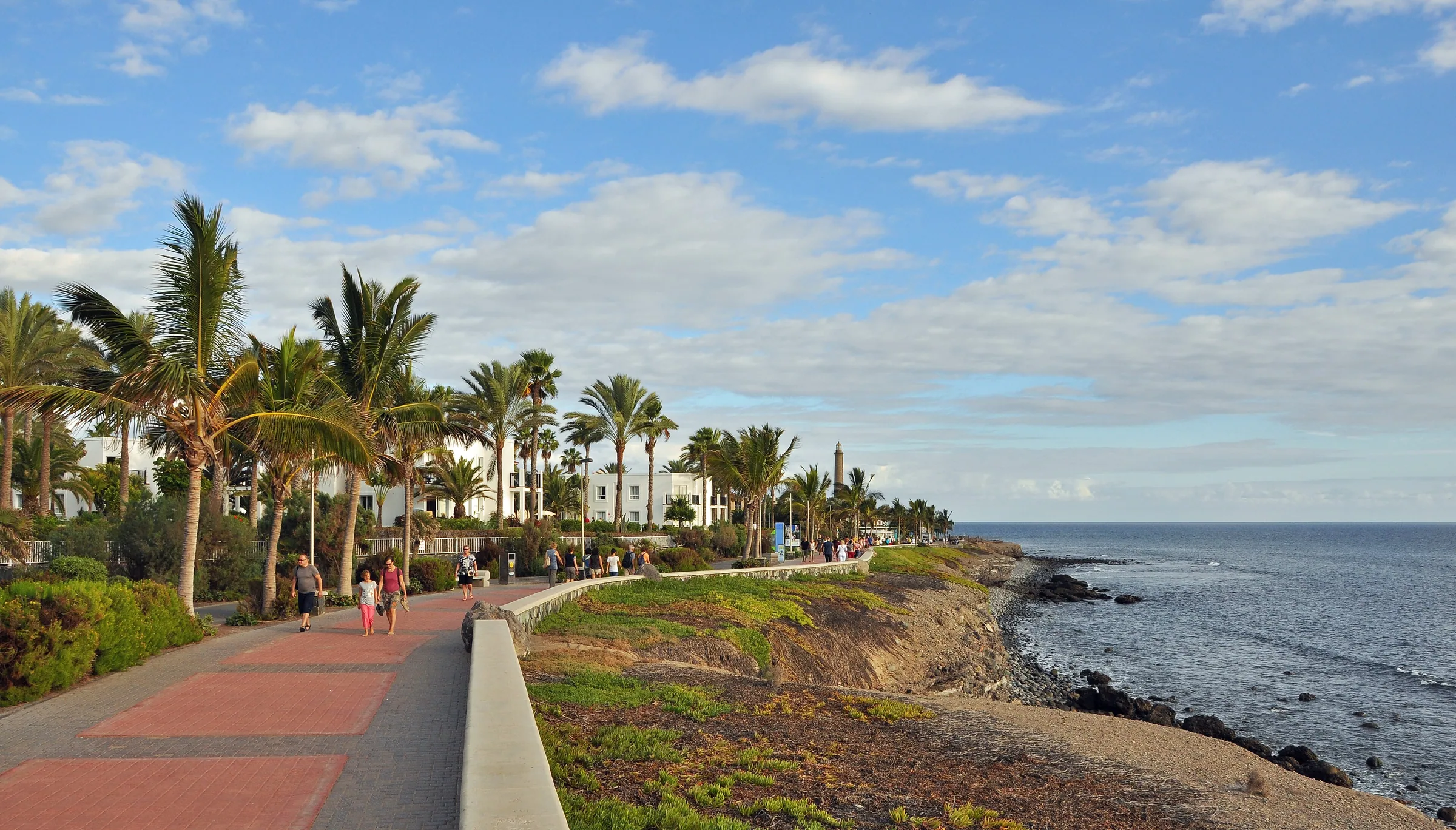
The hour to come is sunset: the sun drops into the sea west of the lighthouse and the Meloneras promenade fills with people on the same mission. If you would rather have the lighthouse almost to yourself, come early in the morning, when rod fishermen take the rocks opposite and the terraces have yet to open.
Tips
- Come when the sun is low: the ashlar turns from grey to blue and then to copper.
- The entrance hall has a Cabildo tourist information office: a good place to sort out questions before heading on to the dunes.
- At low tide you can carry on along the sand to Meloneras beach; at high tide, take the promenade.
- About 150 metres west, on the promenade itself, lies the pre-Hispanic site of Punta Mujeres.