Skip to content

Discover the islandHarbour village

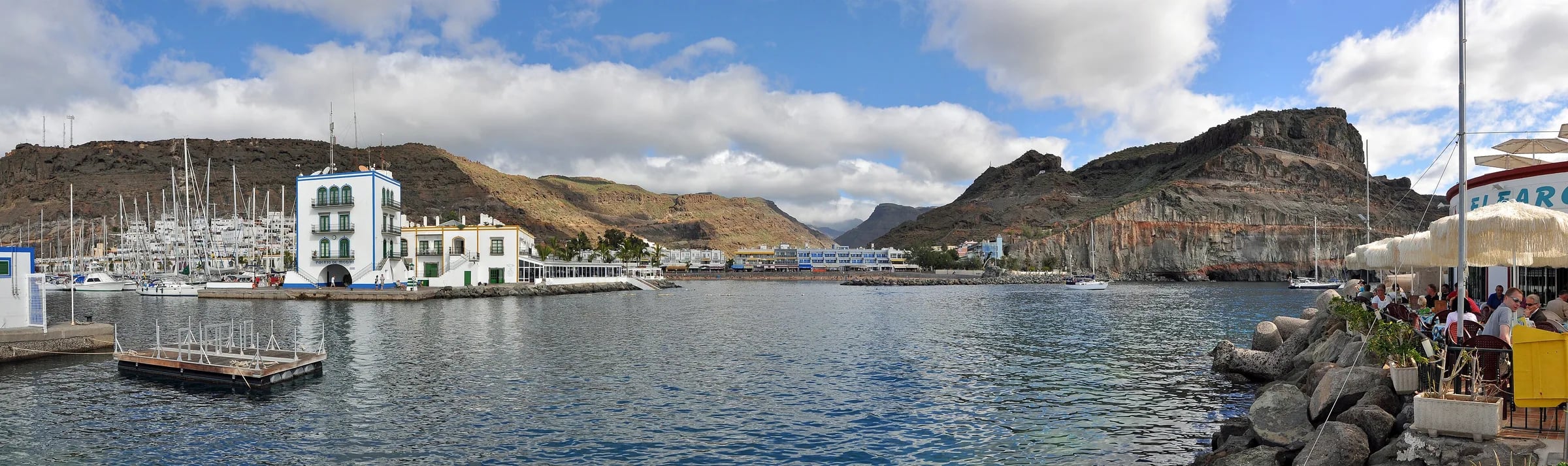
Puerto de Mogán

On the island's south-west coast, Mogán keeps its most photographed harbour: spotless houses smothered in bougainvillea, seawater canals crossed by little bridges, a marina where fishing boats moor beside yachts, and a small, sheltered beach. The official tourist board calls it "the little Venice of the Canaries"; it is also the perfect excuse for a long lunch of fresh fish.

Puerto de Mogán
Photo: Marc Ryckaert (MJJR) · CC BY 3.0

From the fishermen's caves to the marina

In the nineteenth century the fishermen of Mogán lived in cave houses by the mouth of the ravine, from where they watched the shoals of tuna and bonito, and beached their boats on a pebble shore. A salting factory in 1911 and engines from the 1930s changed the trade. When tourism arrived, the place chose to set itself apart from the rest of the island with a 225-berth marina wrapped in an atmosphere of traditional cottages, bougainvillea, hibiscus and small canals; hence the Venice comparison. The fishermen still go out every day, and their catch ends up in the restaurants along the promenade.

What to see

Lose yourself in the maze of canals, passageways and bridges over the seawater, among colourful houses with windows buried in flowers; look for the Ermita de San Fernando, from 1935, where the sailors' wives prayed for their husbands' return, and the quay where fishing boats share pontoons with yachts. The beach is small, with fine sand and calm water thanks to a breakwater: perfect with children. From the harbour go kayaks, dive boats, paddle boards and big-game fishing charters, a local speciality with dozens of world records to its name.

When to go

On Friday mornings the village turns into a street market, with hundreds of stalls of clothes, shoes, crafts, seasonal fruit and local produce: it is the liveliest day and also the busiest, so arrive early. The rest of the week it is a quiet place to eat fish and wander, and its climate, among the sunniest in Europe, with calm water all year round, knows no seasons.

Tips

  • The Friday market runs through the morning; if you drive, come early to park.
  • Order the catch of the day on the promenade: it comes from the quay next door.
  • Drive up the GC-200 to the village of Mogán, deep in the ravine, to see the other face of the municipality.
  • Stay for sunset over the harbour before heading back to Maspalomas.
Nearby

  • Meloneras
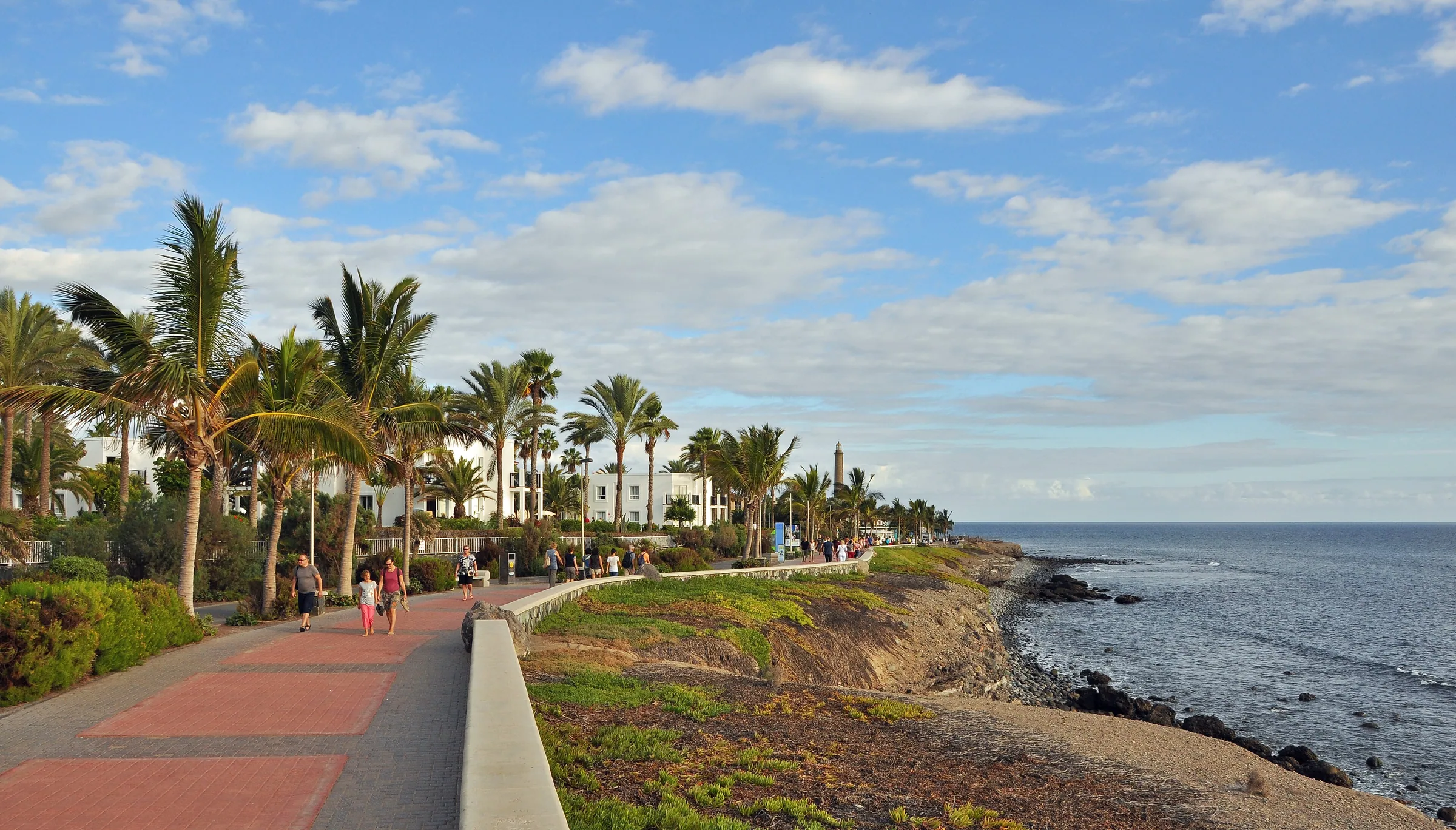
    Photo: Marc Ryckaert (MJJR) · CC BY 3.0

    Seafront promenade and hotels · west of the lighthouse

    Meloneras

    West of the lighthouse the coast changes register: a wide, flat seafront promenade with terraces, shops and the big Meloneras hotels on one side and the Atlantic on the other, ending at a short sandy cove. Halfway along, almost unannounced, sits a pre-Hispanic settlement more than a thousand years old, Punta Mujeres. This is the area for a quiet dinner and the sunset.

  • Maspalomas Lighthouse
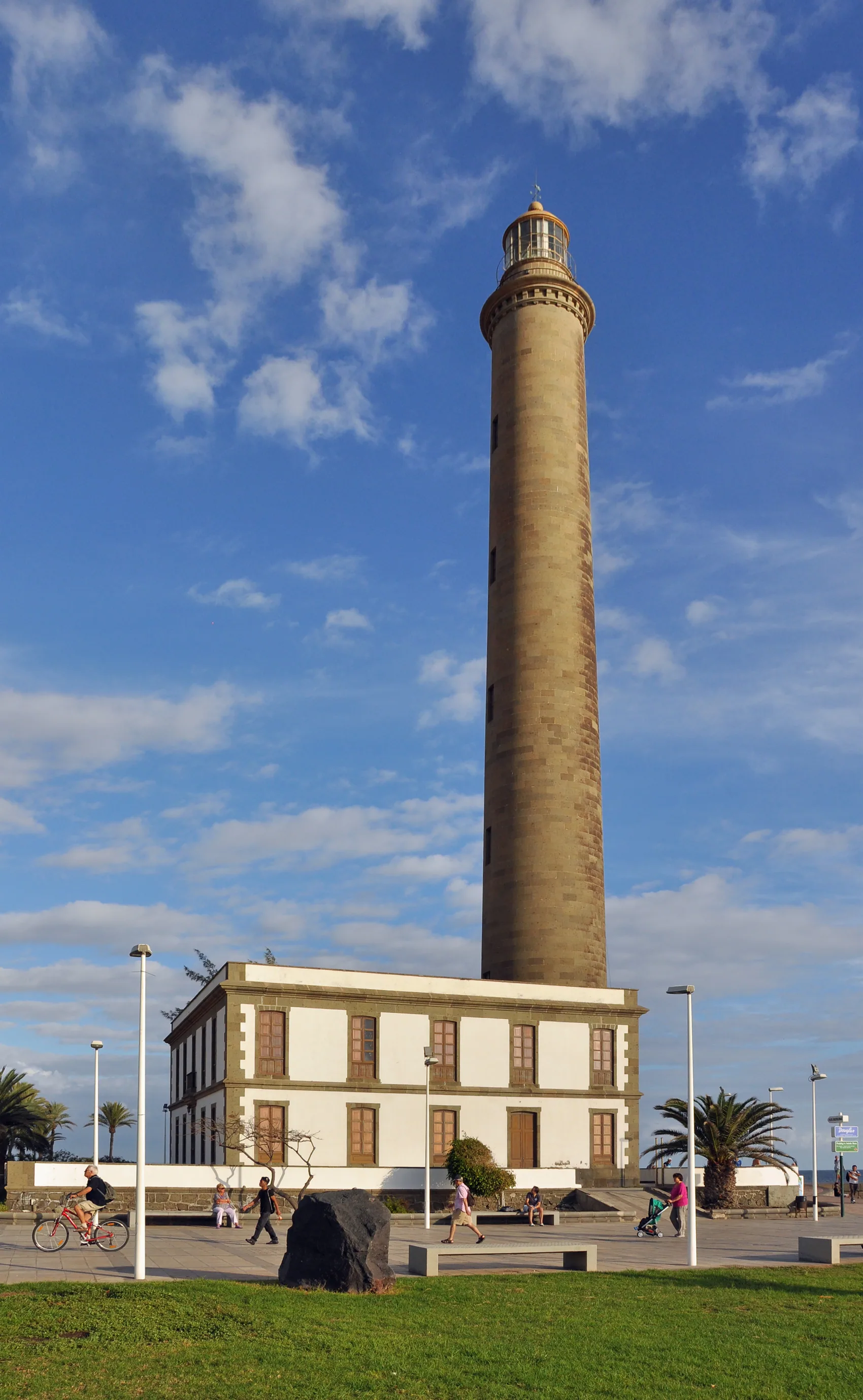
    Photo: Marc Ryckaert (MJJR) · CC BY 3.0

    Historic lighthouse · listed monument

    Maspalomas Lighthouse

    A tower of blue-grey ashlar almost 55 metres tall, marking the southern tip of Gran Canaria since 1 February 1890. Designed by the Telde-born engineer Juan de León y Castillo, it is still a working light, and the keepers' house at its base now holds an ethnographic centre and a tourist office. It is the hinge between Maspalomas beach and the Meloneras promenade.

  • Maspalomas Dunes
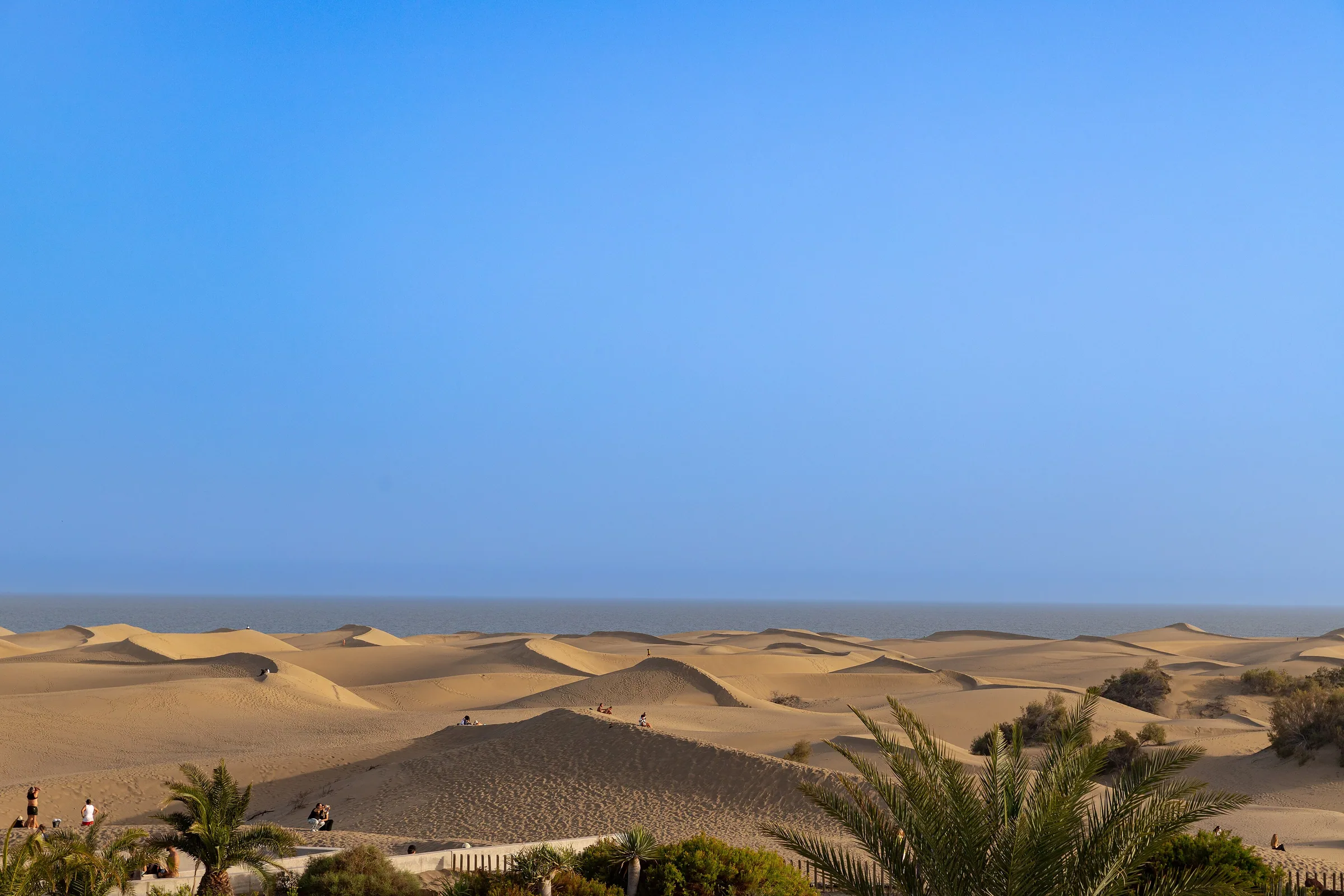
    Photo: dronepicr · CC BY 2.0

    Special Nature Reserve

    Maspalomas Dunes

    A living field of sand, roughly 400 hectares between Playa del Inglés and the lighthouse: dunes the wind reshapes daily, a palm grove and a brackish lagoon where birds rest. It is a Special Nature Reserve and the backdrop to the whole festival. Walk it on the marked trails and along the shore; the moving dunes themselves are off limits.

Back to the guide
Sources